Home

Blog

  • Why Architectural Redundancy Dictates the True TCO of Modern Digital Signage Networks
    Why Architectural Redundancy Dictates the True TCO of Modern Digital Signage Networks
    Jul 15, 2026
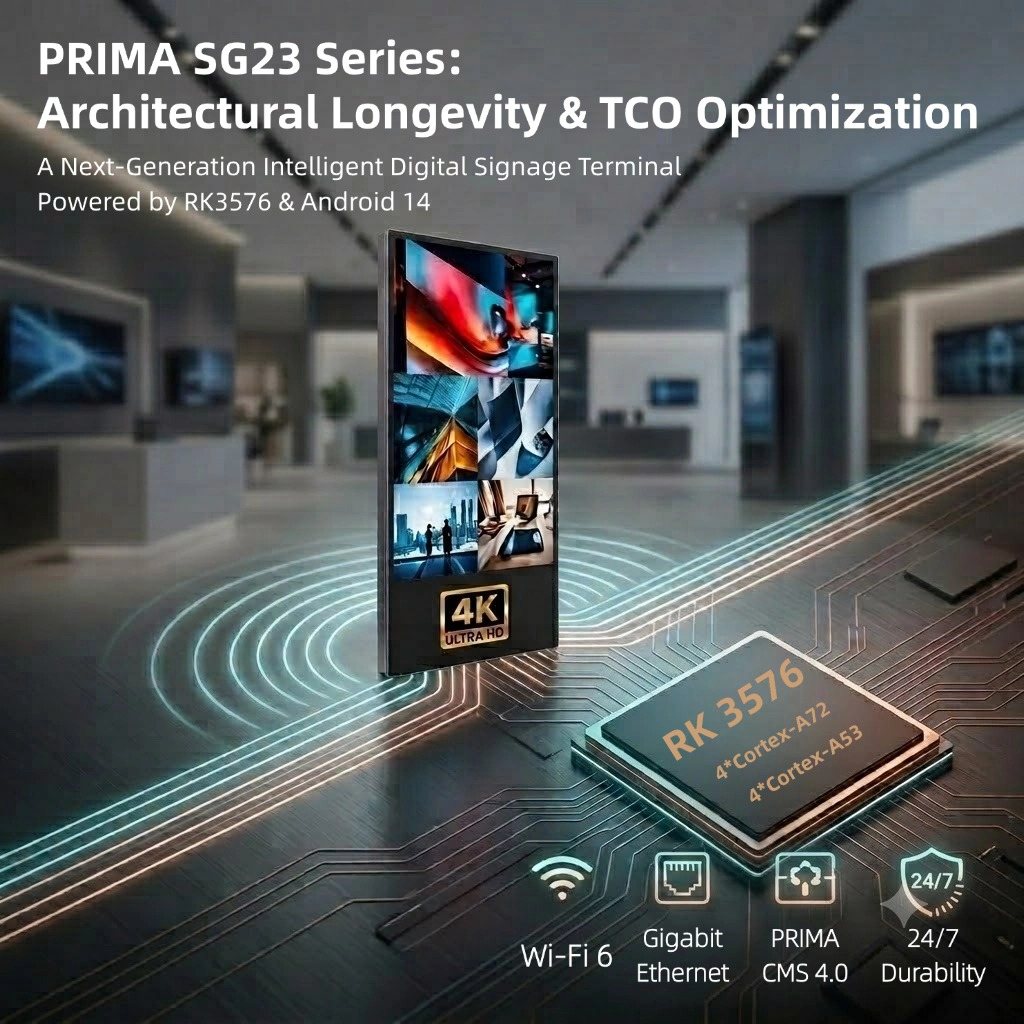
    In our previous discussion, we explored how the rapid evolution of Android operating systems and edge-AI integration is shifting the procurement landscape. B2B buyers are no longer just purchasing screens; they are investing in long-term hardware chassis designed to survive the next 3 to 5 years of software development.   Today, we look at how this forward-looking engineering philosophy translates into physical hardware. Enter the PRIMA SG23 Series—a next-generation intelligent digital signage terminal specifically engineered to bridge the gap between heavy commercial demands and future-ready software compatibility.         1. The Core Architecture: RK3576 meets Android 14 At the heart of the SG23 Series lies a powerful processing foundation: the Rockchip RK3576 octa-core processor (comprising 4 x Cortex-A72 and 4 x Cortex-A53 cores), paired natively with Android 14. In the commercial display sector, many legacy media players still run on outdated, low-tier quad-core chipsets that struggle with modern web-based widgets and high-bitrate 4K decoding. The SG23’s robust octa-core architecture, backed by 4GB RAM and 32GB ROM, provides the exact computational redundancy required for smooth multitasking and seamless transitions. Furthermore, with integrated Wi-Fi 6 and Gigabit Ethernet, the SG23 is built to handle the massive data loads of modern, dynamic content delivery networks without latency.   2. Intelligent Control via PRIMA CMS 4.0 Hardware is only as good as the software that manages it. To eliminate the operational complexity often associated with multi-screen deployments, the SG23 series features our proprietary PRIMA CMS 4.0 platform. Unified Publishing: Edit content once and seamlessly sync it across 1 or 100 devices simultaneously, drastically reducing content-management overhead. Intelligent Scheduling: Automate your playlists to dynamically change content based on the day of the week or hour of the day—perfect for dayparting in retail and dining environments. Zero-Contact Remote Management: Monitor device health, receive instant failure alerts, and perform remote debugging without sending technicians on-site, significantly lowering OPEX.   3. Engineered for the Realities of B2B Environments Consumer-grade TVs fail rapidly when subjected to the harsh, continuous-use demands of commercial spaces. The SG23 is purpose-built for enterprise-level durability: 24/7 Continuous Operation: Engineered with a premium full metal backplate and an optimized passive/active cooling structure, the SG23 is certified for non-stop round-the-clock broadcasting with a service life exceeding 30,000 hours. Industrial Environmental Tolerance: Designed to withstand wide temperature and humidity fluctuations, making it highly reliable for semi-outdoor store windows, transit hubs, and humid public spaces. Uncompromised Visual Performance: Boasting 500 nits of high-efficiency brightness, a 5000:1 contrast ratio, and crisp 4K resolution, the SG23 cuts through ambient glare and bright sunlight to deliver crisp, high-impact imagery at a wide 178° viewing angle.   Conclusion: The Intelligent Choice for Modern AV Integration Whether deployed in portrait or landscape, from its elegant 11.5mm 4-sided equal bezel to its robust internal architecture, the PRIMA SG23 series represents the ideal sweet spot of cost-to-performance ratio for modern digital signage networks. By deploying the SG23, system integrators and IT directors can deliver immediate, high-performance visual experiences today, confident in the knowledge that their hardware assets are fully equipped to adapt to tomorrow's software innovations. 💡 Technical & Performance FAQ Q1: Why does a modern signage display require an octa-core platform like RK3576 instead of a standard quad-core chipset? A: Standard quad-core processors quickly bottleneck when forced to run modern CMS platforms that require simultaneous HTML5 rendering, live database querying, and background data synchronization. The RK3576's octa-core architecture distributes these processing loads across dedicated performance and efficiency cores, preventing system lag and reducing software-related crashes over long-term deployments.   Q2: How does the thermal chassis design of the SG23 protect against backlight decay during 24/7 operation? A: Unlike cheap commercial displays or consumer TVs with poor thermal ventilation, the SG23 features a precision-engineered, heavy-duty metal backplate that acts as a direct passive radiator. By quickly dissipating heat away from the backlight board and power units, it prevents thermal buildup, protects the liquid crystals from heat-induced degradation, and extends the overall life of the panel.   Q3: What are the remote management capabilities of the SG23 running PRIMA CMS 4.0? A: Leveraging the modern architecture of Android 14 paired with PRIMA CMS 4.0, IT administrators can execute remote OTA firmware updates, monitor screen status in real-time, configure automated on/off schedules, and receive instant diagnostic logs without deploying a physical service team—minimizing unnecessary truck rolls and drastically reducing ongoing maintenance overhead.
    Read More
  • The 2026/2027 IFPD Procurement Guide: Why NPU Architecture is the Real Key to Future-Proof Classrooms and Boardrooms
    The 2026/2027 IFPD Procurement Guide: Why NPU Architecture is the Real Key to Future-Proof Classrooms and Boardrooms
    Jul 07, 2026
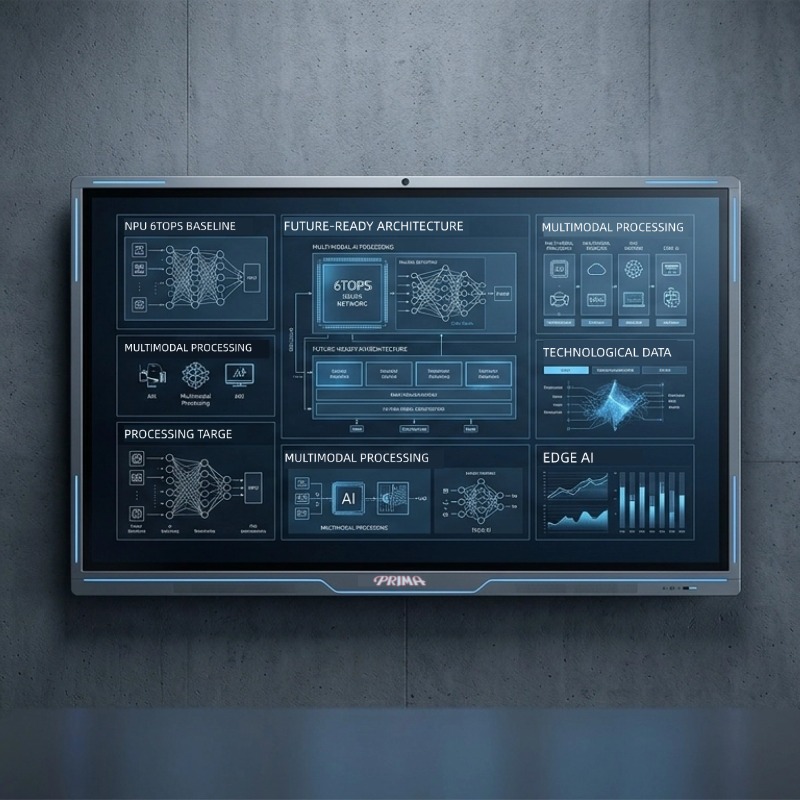
    The global interactive flat panel (IFPD) market is at a fascinating crossroads. With Google’s recent release of Android 17, the conversation around commercial and educational displays is rapidly shifting from basic touch specifications to operating system longevity and edge-AI capabilities.         For AV integrators, school IT directors, and corporate CIOs planning hardware procurement for the upcoming semesters, this transition poses a critical question: How do you invest in hardware today that won't become obsolete when next-generation software ecosystems mature?   The answer doesn’t lie in chasing unoptimized software promises, but in choosing the right hardware foundation. Here is a realistic, conservative look at why NPU-driven architecture (specifically 6TOPS platforms) is the safest and most strategic bet for your current procurement cycle.   1. Understanding the Operating System Horizon: Android 17 and Beyond It is no secret that the commercial display industry moves at a different pace than the consumer smartphone market. While Android 17 has officially made its debut, the B2B ecosystem requires rigorous adaptation. Silicon providers and original equipment manufacturers (OEMs) must undergo extensive testing to ensure maximum stability, enterprise security, and Google EDLA compliance before a commercial-grade upgrade package is deployed.   Therefore, expecting an immediate, out-of-the-box Android 17 deployment on day one in the enterprise sector is unrealistic.   However, procurement is about looking 3 to 5 years ahead. When the mainstream stable packages for Android 17 eventually roll out to the commercial market, older displays running on low-tier, legacy chipsets will simply not have the computational headroom to support it. Buying a display without specialized AI hardware today means accepting early depreciation tomorrow.   2. Why NPU (Neural Processing Unit) Capacity is the Real Divider In 2026, the performance of an IFPD is no longer determined solely by the CPU or GPU. As edge-AI features—such as real-time handwriting prediction, multi-frame facial tracking, and local voice-to-text translation—become standard, the NPU takes center stage.   While ultra-premium, niche IoT chipsets boasting 10TOPS and above are entering the experimental market, they often come with prohibitive cost premiums that disrupt standard public tenders and school budget allocations.   On the other hand, the 6TOPS NPU platform represents the ideal sweet spot for commercial deployment: Sufficient Computational Headroom: A 6TOPS engine provides more than enough computing power to handle modern low-latency writing algorithms and classroom multi-modal interactive software seamlessly. Built for Next-Gen Architecture: Crucially, a 6TOPS hardware base provides the exact structural redundancy required to align with future OS upgrades, such as Android 17’s enhanced resource-management protocols. Cost-to-Performance Efficiency: It delivers enterprise-grade AI capabilities without forcing distributors to price themselves out of highly competitive educational and corporate bids.   By anchoring your procurement on a 6TOPS platform, you are securing a "Future-Ready" chassis. You gain maximum stability under current enterprise operating systems today, while ensuring the hardware isn't a bottleneck when the software landscape evolves.   3. The Essentials of Modern IFPD Procurement If you are drafting a request for proposal (RFP) or evaluating vendors for a large-scale rollout in late 2026 or 2027, look beyond the screen resolution. Ensure your hardware checks these three essential boxes: Hardware-Level NPU (Minimum 6TOPS Platform): Ensure the display has dedicated neural processing capabilities. This guarantees that local AI algorithms run smoothly without draining the main CPU/GPU, ensuring the device remains responsive during heavy multitasking. Official Google EDLA Certification: Security and seamless access to Google Workspace or Microsoft 365 cannot be compromised. An EDLA-certified display ensures enterprise-grade encryption and native app integration right out of the box. Architectural Longevity (Future-Proof Readiness): Choose a manufacturer that designs hardware with system upgrade paths in mind. A robust, mid-to-high-tier architecture ensures that when silicon providers finalize stable software packages for next-generation platforms, your hardware is fully capable of adapting.     Conclusion: Invest in Stability, Prepare for Evolution The most successful B2B technology investments are those that balance current operational absolute-stability with future flexibility.   At PRIMA, our philosophy centers on engineering hardware platforms that respect the realities of the commercial supply chain while anticipating technological shifts. By focusing on robust architecture and optimized NPU baselines, we ensure that our global partners can bid with confidence today, knowing their clients' investments are protected for years to come.   💡 Technical & Performance FAQ Q1: Since Android 17 has been officially released, does it mean standard enterprise IFPDs will adopt it immediately? A: Historically, the commercial display sector moves deliberately compared to the consumer mobile market. A stable, commercial-grade OS deployment requires rigorous adaptation from silicon providers, intensive hardware compatibility testing, and official Google EDLA certification validation. For enterprise and educational tenders in late 2026, stability remains the absolute priority, meaning current certified stable platforms (like Android 16/14) will remain the mainstream operational baseline while next-gen packages mature.   Q2: Why is a 6TOPS NPU highlighted as the "future-proof sweet spot" for upcoming procurement cycles? A: Procurement is about looking 3 to 5 years ahead. While current displays easily handle basic tasks, the upcoming wave of edge-AI software (such as zero-latency handwriting prediction, multi-modal interface management, and localized voice-to-text translation) demands dedicated neural processing. A 6TOPS NPU provides the exact computational headroom required to support these advanced features and future OS architecture changes, without the prohibitive cost premiums of unoptimized niche chipsets. It secures your investment today for tomorrow's software evolution.   Q3: If we procure PRIMA displays running current stable operating systems today, are we protected against future technology shifts? A: Absolutely. PRIMA's engineering philosophy centers on Architectural Readiness. By deploying mid-to-high-tier computing platforms equipped with robust NPU capacities, we ensure that the underlying hardware chassis is not a bottleneck. When silicon providers and Google finalize stable, enterprise-grade upgrade pathways for next-generation platforms, our robust hardware foundation is fully engineered to adapt, protecting your critical CapEx from early depreciation.
    Read More
  • From Hybrid Learning to Smart Collaboration: Maximizing Workplace and Classroom Engagement in 2026
    From Hybrid Learning to Smart Collaboration: Maximizing Workplace and Classroom Engagement in 2026
    Jun 30, 2026
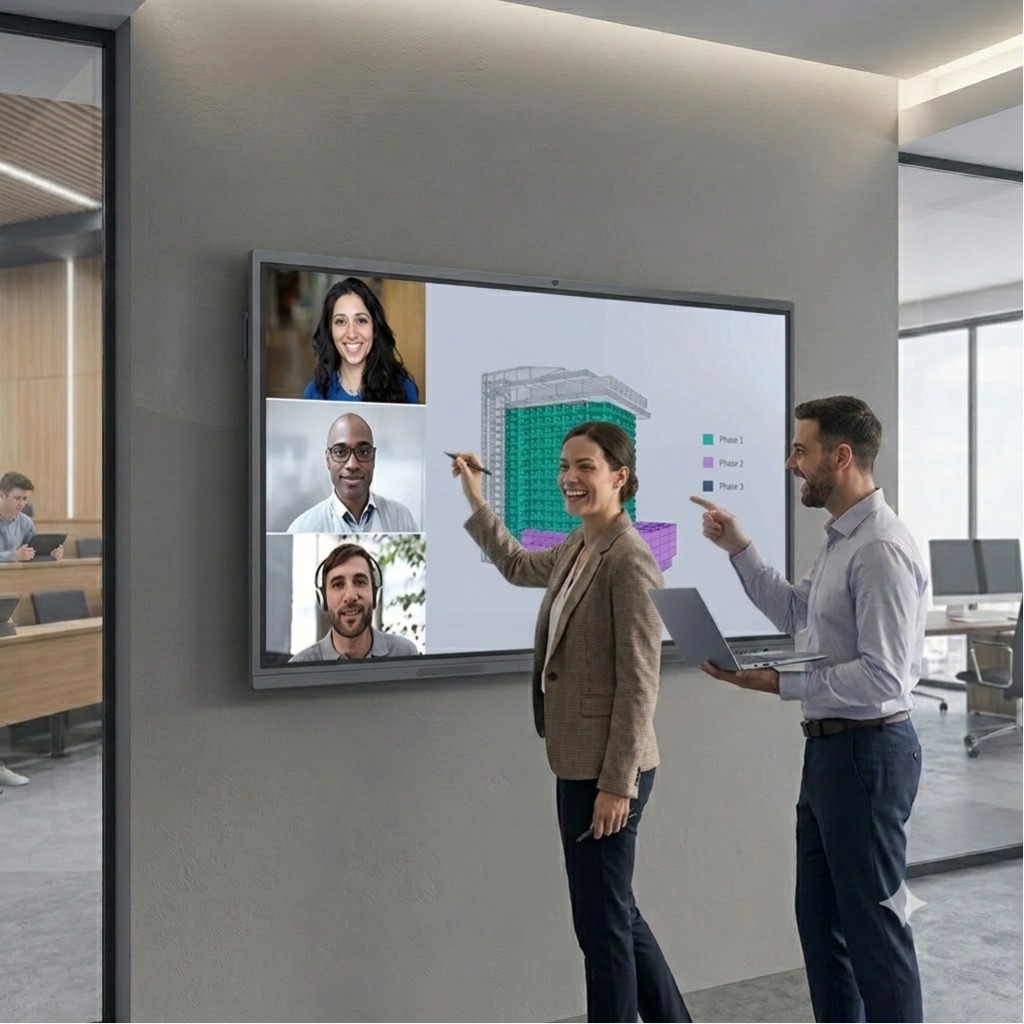
    For years, the procurement of Interactive Flat Panels (IFPDs) followed a predictable trajectory: schools and enterprises invested thousands of dollars in large-format touchscreens, only for these advanced computational platforms to be relegated to glorified, over-specified projectors or reactive digital whiteboards. The hardware arrived with elite processing potential, yet the daily user experience remained shackled by manual file transfers, disconnected cloud accounts, and distracting touch latency that disrupted the natural flow of human teaching and collaboration.         In 2026, that era of underutilized hardware is officially over. The transition from passive presentation to active, frictionless immersion requires a fundamental shift in how hardware and software interlock. By harnessing the native capabilities of Android 16, official Google EDLA (Enterprise Device Licensing Agreement) integration, and localized 6TOPS NPU edge computing, the PRIMA SA6J Series does not just display content—it orchestrates an interconnected ecosystem. For B2B distributors and educational/corporate buyers, this shifts the narrative from selling mere physical glass to delivering a comprehensive, modern collaboration framework.   Frictionless Ecosystem Integration: Banishing the USB Flash Drive In a fast-paced classroom or executive boardroom, momentum is everything. The traditional ritual of a guest speaker or educator walking up to an IFPD, fumbling with a USB flash drive, struggling with cross-platform formatting issues, or attempting to type complex cloud passwords on a public screen is a major engagement killer. It introduces critical security risks and drains valuable collaborative time.   With native Google EDLA validation integrated into the PRIMA SA6J Series, the interactive display shifts from an isolated hardware silo into a seamless, trusted extension of the institution's primary cloud environment. Native Account Synchronization: Educators and corporate facilitators can walk up to any panel within the fleet and securely sign in via their official institutional credentials or a secure Single Sign-On (SSO) mobile prompt. Instant Cloud Access: Within seconds, their personalized workspace—including custom wallpapers, individual app layouts, and direct access to Google Classroom, Google Workspace, Microsoft OneDrive, and native cloud drives—is rendered instantly. Zero-Sideloading Compliance: Because the Google Play Store is natively accessible and verified by Google Play Protect, users can pull down enterprise-grade collaborative applications, engineering viewers, or real-time polling tools directly from the cloud. No unsecured third-party APKs, no manual configurations, and no administrative friction.   Edge-AI Infused Interactive Performance: The NPU Writing Revolution Even the most seamless cloud integration fails to engage an audience if the fundamental touch-and-ink experience feels unnatural. When multiple students stand at a board to solve an equation, or when product design teams sketch engineering modifications during a hybrid sprint, even a few milliseconds of digital ink lag causes immediate psychological disconnection. The brain notices the separation between physical intent and visual execution.   This is where the specialized 6TOPS Neural Processing Unit (NPU) on the Rockchip RK3576 platform shifts from a technical line item to a transformative experiential asset.   Traditional displays rely on a generalized CPU to track touch vectors, calculate coordinate pathways, and render digital ink—a pipeline heavily prone to stuttering when system tasks scale up. The PRIMA SA6J Series offloads these high-frequency mathematical calculations onto the dedicated hardware-level NPU engine. Predictive Latency Reduction: The 6TOPS NPU runs deep-learning predictive stroke algorithms directly at the edge. By analyzing the vector, speed, and acceleration of the stylus or finger, the NPU mathematically anticipates the user's trajectory, reducing perceived ink latency to an absolute near-zero minimum. Writing on the panel feels as instantaneous and organic as graphite on textured paper. True Multi-User Concurrency: Whether it is four students collaborating on an interactive STEM chart or a corporate project management team mapping an agile workflow, the dedicated NPU processes multi-point multi-user inputs simultaneously without degrading frame rates or dropping touch packets.   Commercial Enablement: Moving Distributors Beyond the Commodity Trap For B2B distributors and commercial AV integrators, the scenario-driven superiority of the PRIMA SA6J platform completely rewrites the rules of market engagement. Competing solely on panel brightness, contrast ratios, or minor price concessions is a fast track to margin erosion.   By pivoting the commercial discourse toward high-impact, real-world deployment scenarios, channel partners can unlock far greater contract values: Selling the Solution, Not the Component: Distributors can position the PRIMA SA6J platform not as a standalone display unit, but as a turnkey Modern Classroom/Workplace Transformation Package. It provides an instant hook for school district superintendents and enterprise COOs who are desperate to justify their digital transformation budgets with tangible usage metrics. Mitigating Post-Implementation Disappointment: When hardware is difficult to use, adoption rates plummet, leading to buyer remorse and strained client relationships. Because the SA6J series mimics the intuitive user interfaces of the smartphones and tablets that users interact with daily, user adoption is immediate, drastically reducing post-sale training overhead and warranty complaints for the integrator. Future-Proof Scale: Demonstrating how Android 16 and a 6TOPS edge-AI chip handle complex software updates ensures the client's investment remains viable for years to come. This elevates the distributor's status from a simple hardware vendor to a strategic, long-term technology advisor.     Technical & Performance FAQ   Q1: How does official Google EDLA certification improve the daily workflow for teachers and corporate presenters compared to standard uncertified open-source Android panels? A: On uncertified open-source Android panels, users must rely on external laptops or dangerous third-party APK sideloading to access cloud materials, causing constant setup delays. Official Google EDLA certification on the PRIMA SA6J Series allows users to securely log into their official Google or Microsoft enterprise accounts directly on the display. It grants native, instant access to Google Classroom, Cloud Drive, and Workspace apps with real-time file synchronization, eliminating the need for external connection cables or vulnerable USB flash drives.   Q2: Why is a dedicated 6TOPS NPU required to achieve low-latency writing on the PRIMA SA6J Series? A: Standard interactive displays handle touch detection through the main CPU, which often bottlenecks during complex multi-user interactions, resulting in visible ink lag. The PRIMA SA6J Series features a specialized 6TOPS Neural Processing Unit (NPU) that runs edge-AI predictive stroke models. By dedicatedly calculating finger/stylus vectors and predicting writing trajectories at the hardware level, the NPU bypasses CPU overhead to reduce touch latency to near-zero, maintaining flawless pen-to-glass fluidity even during heavy multi-user concurrent operation.   Q3: How does the integration of Android 16 optimize multi-user corporate hot-desking or multi-classroom rotation? A: Android 16 introduces advanced user-profile sandboxing and strict scoped-storage rules native to the operating system. When multiple educators or corporate teams rotate through a single room and log into their respective cloud profiles on the PRIMA SA6J display, Android 16 ensures that cached credentials, search history, and private cloud session tokens from the previous user are entirely isolated and cryptographically protected, preventing unauthorized data access or cross-contamination.
    Read More
  • Securing the Network Edge: How Android 16 and Google EDLA Redefine IFPD Fleet Management for B2B Channels
    Securing the Network Edge: How Android 16 and Google EDLA Redefine IFPD Fleet Management for B2B Channels
    Jun 24, 2026
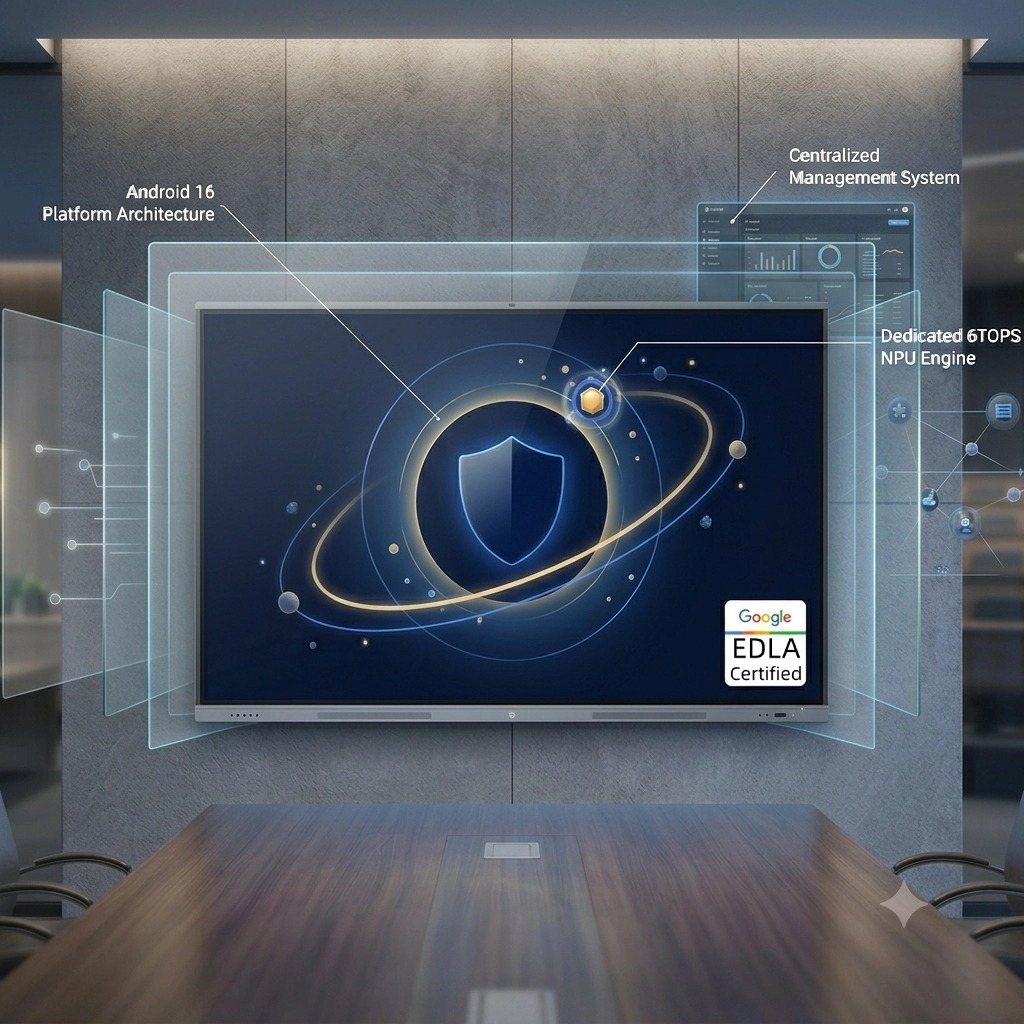
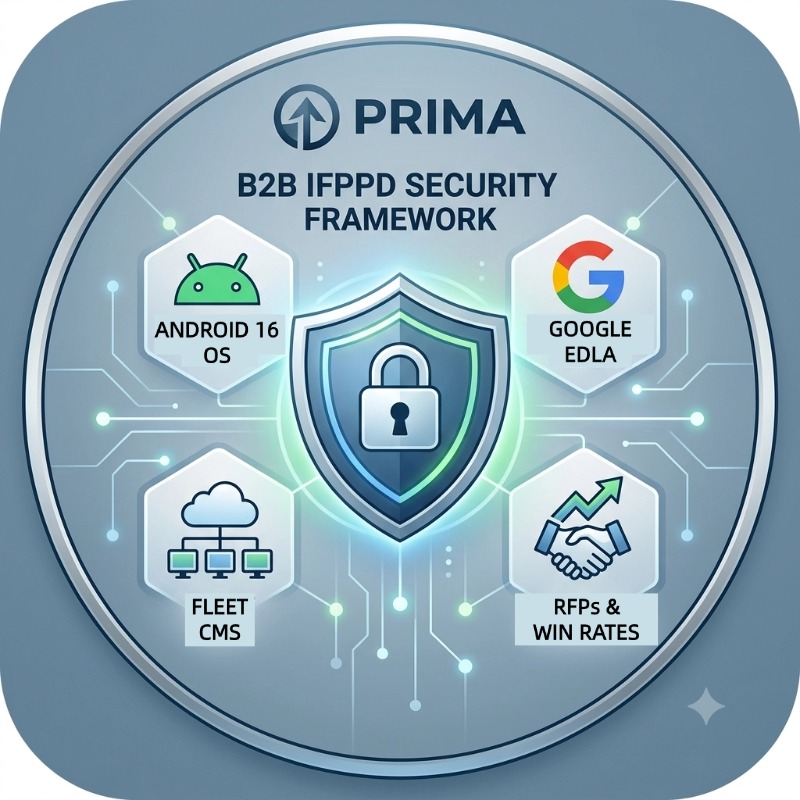
    For institutional Chief Information Officers (CIOs) and IT administrators, the rapid proliferation of Interactive Flat Panels (IFPDs) has introduced a complex operational paradox. While educators and corporate teams demand increasingly open, cloud-integrated collaborative environments, the network infrastructure must remain completely sealed against rising cybersecurity vectors. An uncertified commercial display, poorly maintained or lacking modern patch infrastructure, represents an unacceptable network edge vulnerability.   However, this challenge does not rest solely on the shoulders of the end-user. For B2B distributors and system integrators, the hardware evaluation landscape in 2026 has fundamentally shifted. Winning high-volume government and enterprise tenders no longer depends on chasing raw hardware specs; it depends on delivering a secured, compliant, and remotely manageable ecosystem. By seamlessly uniting a high-performance hardware foundation with the native architecture of Android 16 and official Google EDLA (Enterprise Device Licensing Agreement) certification, next-generation displays like the PRIMA SA6J Series are transforming how B2B channels protect their margins, and how IT teams secure their hardware infrastructure.         The Architecture of Security: A Synergistic Approach to Compliance In modern commercial display engineering, software security and official compliance cannot be evaluated in isolation. They operate in a tightly integrated, hardware-to-software synergy. For B2B distributors pitching to security-conscious enterprise clients, articulating this multi-layered defense mechanism is the key to decoupling conversations from price-wars and shifting them toward long-term platform value.   1. The Digital Backbone: Android 16 Native Architecture Android 16 delivers the underlying, foundational security architecture at the OS level. It defines the mathematical and cryptographic rules of the display: Advanced Scoped Storage and Sandbox Isolation: Android 16 enforces strict hardware-level isolation between applications. Enterprise data pipelines and user credentials cannot be monitored or scraped by malicious background processes, ensuring zero cross-contamination during multi-user hot-desking sessions. Cryptographic Credential Protection: The platform utilizes upgraded hardware-backed keystore systems to encrypt user tokens, facilitating secure, enterprise-grade Single Sign-On (SSO) integration.   2. The Official Gateway: Google EDLA Validation While Android 16 creates the robust defensive ground, Google EDLA certification acts as the official validation layer and regulatory key. Android 16 provides the secure capability; EDLA guarantees that these native security protocols are strictly enforced and legally compliant. Continuous Threat Mitigation: EDLA mandates server-side malware monitoring via Google Play Protect, running real-time cloud background scans to intercept malicious endpoints before they breach the institutional domain. Official Cloud Synchronization: It grants verified, secure access to the native Google Workspace for Education and corporate cloud ecosystems, allowing users to log in natively via official enterprise credentials without the critical network liabilities of sideloading unverified third-party APKs.     Fleet Optimization and Commercial Monetization via Hybrid Local/Cloud CMS Architecture Securing the endpoint is only half the operational equation; the real commercial value for distributors and large-scale enterprises lies in day-to-day fleet synchronization. An integrated Centralized Management System (CMS) transitions the PRIMA SA6J Series from an isolated piece of hardware into a scalable, networked infrastructure.   Crucially, PRIMA utilizes a flexible hybrid local (LAN) and cloud-based CMS deployment matrix. For ultra-secure government agencies, military commands, or research universities requiring absolute physical isolation, the CMS can be deployed locally on-premise over a closed Local Area Network (LAN)—ensuring zero external data leakage. Conversely, for distributed corporate campuses, multi-site school districts, or global channel partners, the cloud-based CMS architecture opens up borderless remote administration.   Rather than dispatching IT technicians to manually flash firmware room-by-room, this hybrid architecture allows for comprehensive remote administration from a single centralized dashboard. For distributors, this introduces a massive commercial paradigm shift: it allows channel partners to transition from low-margin one-time hardware sales into recurring, high-margin Managed Service Provider (MSP) contracts—remotely hosting and managing the fleet infrastructure via the cloud on behalf of school districts or corporate clients who lack dedicated internal IT staff.     Fleet Management Challenge Legacy Manual Intervention NPU & Hybrid CMS-Accelerated Automation (LAN / Cloud) Firmware & Security Patching Individual USB flashing; causes high labor overhead and delayed vulnerability patches. Automated, scheduled Over-The-Air (OTA) batch updates executed during off-peak hours via local LAN servers or the cloud. Application & Provisioning Manual sideloading of APKs; high risk of malware introduction and version fragmentation. Centralized application deployment and silent installation via certified enterprise or private local repositories. Power & Sustainability Auditing Over-night idling due to user neglect; shortens panel lifespans and inflates electricity bills. Remote power scheduling, real-time diagnostic reporting, and automated energy policy enforcement across all subnets.     Mitigating Risk and Maximizing B2B Contract Win Rates As a dedicated B2B commercial display manufacturer, PRIMA engineers platforms that deliberately eliminate friction across the entire supply chain. Proposing a future-proof architecture like the PRIMA SA6J Series (Rockchip RK3576 / Android 16 / EDLA / Hybrid CMS) delivers distinct structural protections for distributors and integrators: Accelerated Procurement Cycles: When bidding on complex government or corporate RFPs, uncertified hardware often triggers lengthy, multi-month security audits by institutional network teams. Presenting an EDLA-certified solution with dual LAN/Cloud server deployment capabilities bypasses these compliance hurdles immediately, drastically reducing sales cycles for distributors. Post-Sale Margin Protection: By empowering clients or channel partners with remote diagnostic capabilities via the CMS, the frequency of low-value, high-cost technical onsite interventions (truck rolls) is reduced by up to 70%. Hardware instability, application crashes, and configuration errors are resolved over the cloud or private network before they can degrade the client's daily workflow. Elimination of Technical Obsolescence: Combining a 6TOPS NPU for ultra-low latency processing with the modern lifecycle of Android 16 ensures the hardware remains fully compatible with third-party software updates until 2030, safeguarding the distributor’s brand reputation against premature hardware depreciation.   By delivering the precise balance of elite edge-AI compute power, structural data privacy, and global network deployment flexibility, PRIMA ensures its global B2B distribution networks can confidently conquer any enterprise RFP and secure long-term commercial growth.       🌐 Technical Directory & Compliance FAQ   Q1: What is the technical difference between the security roles of Android 16 and Google EDLA on the PRIMA SA6J Series? A: Android 16 and Google EDLA operate in a complementary, hardware-to-software synergy. Android 16 provides the foundational security architecture, implementing hardware-level application sandboxing (Advanced Scoped Storage) and cryptographic encryption via upgraded keystore systems to protect user tokens. Google EDLA acts as the enforcement and validation layer; it guarantees these native security protocols are uncompromised, mandates continuous cloud-based malware scanning via Google Play Protect, and unlocks secure, native Single Sign-On (SSO) access to the official Google Workspace ecosystem without the network risks of sideloading unverified third-party APKs.   Q2: Does the PRIMA SA6J Series CMS require an active internet connection to execute fleet management? A: No. The PRIMA SA6J Series utilizes a flexible hybrid CMS architecture. For high-security environments requiring absolute physical data isolation (such as government installations or private enterprises), the CMS can be deployed entirely on-premise over a closed Local Area Network (LAN) with zero external internet dependencies. For multi-site configurations or remote value-added technical support, the system can switch to a cloud-based CMS deployment model.   Q3: How does the hybrid CMS topology help B2B distributors lower technical support costs and generate recurring revenue? A: By leveraging the cloud capabilities of the hybrid CMS, distributors can act as Managed Service Providers (MSPs), signing lucrative remote maintenance contracts with clients. This enables technical teams to troubleshoot software, update firmware, and optimize settings remotely from their corporate headquarters—eliminating low-value physical tech deployments (truck rolls) by up to 70%. For clients with strict offline policies, the local LAN management option allows the distributor to easily train the end-user's in-house IT team, mitigating downstream warranty liabilities.   Q4: Why is the Rockchip RK3576 platform's 6TOPS NPU critical for institutional data privacy and TCO reduction? A: The dedicated 6TOPS Neural Processing Unit (NPU) inside the PRIMA SA6J Series processes specialized machine learning workloads—such as handwriting vectorization and acoustic voice tracking—locally at the hardware edge. By running these advanced algorithms locally on the NPU instead of routing data streams to external cloud servers, institutional data privacy is completely preserved. Furthermore, offloading these complex computations away from the primary CPU prevents processor saturation and high thermal spikes, significantly extending the physical lifecycle of the panel and lowering the total cost of ownership (TCO).
    Read More
  • Securing the Network Edge: How Android 16 and Google EDLA Redefine IFPD Fleet Management for B2B Channels
    Securing the Network Edge: How Android 16 and Google EDLA Redefine IFPD Fleet Management for B2B Channels
    Jun 17, 2026
    For institutional Chief Information Officers (CIOs) and IT administrators, the rapid proliferation of Interactive Flat Panels (IFPDs) has introduced a complex operational paradox. While educators and corporate teams demand increasingly open, cloud-integrated collaborative environments, the network infrastructure must remain completely sealed against rising cybersecurity vectors. An uncertified commercial display, poorly maintained or lacking modern patch infrastructure, represents an unacceptable network edge vulnerability.     However, this challenge does not rest solely on the shoulders of the end-user. For B2B distributors and system integrators, the hardware evaluation landscape in 2026 has fundamentally shifted. Winning high-volume government and enterprise tenders no longer depends on chasing raw hardware specs; it depends on delivering a secured, compliant, and remotely manageable ecosystem. By seamlessly uniting a high-performance hardware foundation with the native architecture of Android 16 and official Google EDLA (Enterprise Device Licensing Agreement) certification, next-generation displays like the PRIMA SA6J Series are transforming how B2B channels protect their margins, and how IT teams secure their hardware infrastructure.   The Architecture of Security: A Synergistic Approach to Compliance In modern commercial display engineering, software security and official compliance cannot be evaluated in isolation. They operate in a tightly integrated, hardware-to-software synergy. For B2B distributors pitching to security-conscious enterprise clients, articulating this multi-layered defense mechanism is the key to decoupling conversations from price-wars and shifting them toward long-term platform value.   1. The Digital Backbone: Android 16 Native Architecture Android 16 delivers the underlying, foundational security architecture at the OS level. It defines the mathematical and cryptographic rules of the display: Advanced Scoped Storage and Sandbox Isolation: Android 16 enforces strict hardware-level isolation between applications. Enterprise data pipelines and user credentials cannot be monitored or scraped by malicious background processes, ensuring zero cross-contamination during multi-user hot-desking sessions. Cryptographic Credential Protection: The platform utilizes upgraded hardware-backed keystore systems to encrypt user tokens, facilitating secure, enterprise-grade Single Sign-On (SSO) integration.   2. The Official Gateway: Google EDLA Validation While Android 16 creates the robust defensive ground, Google EDLA certification acts as the official validation layer and regulatory key. Android 16 provides the secure capability; EDLA guarantees that these native security protocols are strictly enforced and legally compliant. Continuous Threat Mitigation: EDLA mandates server-side malware monitoring via Google Play Protect, running real-time cloud background scans to intercept malicious endpoints before they breach the institutional domain. Official Cloud Synchronization: It grants verified, secure access to the native Google Workspace for Education and corporate cloud ecosystems, allowing users to log in natively via official enterprise credentials without the critical network liabilities of sideloading unverified third-party APKs.   Fleet Optimization and Commercial Monetization via Centralized Management Systems (CMS) Securing the endpoint is only half the operational equation; the real commercial value for distributors and large-scale enterprises lies in day-to-day fleet synchronization. An integrated Centralized Management System (CMS) transitions the PRIMA SA6J Series from an isolated piece of hardware into a scalable, cloud-managed infrastructure.   Rather than dispatching IT technicians to manually flash firmware room-by-room, a robust CMS allows for comprehensive remote administration from a single dashboard. For distributors, this introduces a massive commercial paradigm shift: it allows channel partners to transition from low-margin one-time hardware sales into recurring, high-margin Managed Service Provider (MSP) contracts, managing the fleet infrastructure on behalf of the school district or corporate client.   Fleet Management Challenge Legacy Manual Intervention NPU & CMS-Accelerated Automation Firmware & Security Patching Individual USB flashing; causes high labor overhead and delayed vulnerability patches. Automated, scheduled Over-The-Air (OTA) batch updates executed during off-peak hours via the cloud. Application & Provisioning Manual sideloading of APKs; high risk of malware introduction and version fragmentation. Centralized application deployment and silent installation via certified enterprise repositories. Power & Sustainability Auditing Over-night idling due to user neglect; shortens panel lifespans and inflates electricity bills. Remote power scheduling, real-time diagnostic reporting, and automated energy policy enforcement.   Mitigating Risk and Maximizing B2B Contract Win Rates As a dedicated B2B commercial display manufacturer, PRIMA engineers platforms that deliberately eliminate friction across the entire supply chain. Proposing a future-proof architecture like the PRIMA SA6J Series (Rockchip RK3576 / Android 16 / EDLA / CMS) delivers distinct structural protections for distributors and integrators: Accelerated Procurement Cycles: When bidding on complex government or corporate RFPs, uncertified hardware often triggers lengthy, multi-month security audits by institutional network teams. Presenting an EDLA-certified solution bypasses these compliance hurdles immediately, drastically reducing sales cycles for distributors. Post-Sale Margin Protection: By empowering clients or channel partners with remote diagnostic capabilities via the CMS, the frequency of low-value, high-cost technical onsite interventions (truck rolls) is reduced by up to 70%. Hardware instability, application crashes, and configuration errors are resolved over the cloud before they can degrade the client's daily workflow. Elimination of Technical Obsolescence: Combining a 6TOPS NPU for ultra-low latency processing with the modern lifecycle of Android 16 ensures the hardware remains fully compatible with third-party software updates until 2030, safeguarding the distributor’s brand reputation against premature hardware depreciation.   By delivering the precise balance of elite edge-AI compute power, structural data privacy, and global network compliance, PRIMA ensures its global B2B distribution networks can confidently conquer any enterprise RFP and secure long-term commercial growth.   FAQ Q1: What is the technical difference between the security roles of Android 16 and Google EDLA on the PRIMA SA6J Series? A: Android 16 and Google EDLA operate in a complementary, hardware-to-software synergy. Android 16 provides the foundational security architecture, implementing hardware-level application sandboxing (Advanced Scoped Storage) and cryptographic encryption via upgraded keystore systems to protect user tokens. Google EDLA acts as the enforcement and validation layer; it guarantees these native security protocols are uncompromised, mandates continuous cloud-based malware scanning via Google Play Protect, and unlocks secure, native Single Sign-On (SSO) access to the official Google Workspace ecosystem without the network risks of sideloading unverified third-party APKs.   Q2: How does a Centralized Management System (CMS) help B2B distributors generate recurring revenue? A: An integrated Centralized Management System (CMS) allows distributors and system integrators to transition from one-time hardware hardware transactions into high-margin Managed Service Providers (MSPs). Through the cloud dashboard, distributors can offer value-added remote fleet optimization contracts to school districts and enterprise clients—handling bulk Over-The-Air (OTA) firmware patches, executing silent application deployment, and compiling energy sustainability audits remotely, which simultaneously slashes onsite tech support costs (truck rolls) by up to 70%.   Q3: Why is the Rockchip RK3576 platform's 6TOPS NPU critical for institutional data privacy and TCO reduction? A: The dedicated 6TOPS Neural Processing Unit (NPU) inside the PRIMA SA6J Series processes specialized machine learning workloads—such as handwriting vectorization and acoustic voice tracking—locally at the hardware edge. By running these advanced algorithms locally on the NPU instead of routing data streams to external cloud servers, institutional data privacy is completely preserved. Furthermore, offloading these complex computations away from the primary CPU prevents processor saturation and high thermal spikes, significantly extending the physical lifecycle of the panel and lowering the total cost of ownership (TCO).
    Read More
  • What is an NPU? How Edge-AI Processing is Revolutionizing Modern Smart Environments
    What is an NPU? How Edge-AI Processing is Revolutionizing Modern Smart Environments
    Jun 10, 2026
    In the vocabulary of commercial display procurement, acronyms like CPU and GPU have reigned supreme for decades. Buyers naturally check the number of processing cores and graphics frequencies when evaluating interactive flat panels (IFPDs). However, as classrooms and corporate boardrooms transition from passive whiteboards to intelligent collaboration hubs, traditional processing architectures are hitting a physical performance wall.       Enter the Neural Processing Unit (NPU). In 2026, dedicated Edge-AI processing has shifted from an experimental premium feature to an foundational infrastructural requirement. For institutional IT decision-makers, understanding the role of an NPU is the key to decoupling system longevity from computational lag. For system integrators, leveraging NPU-driven hardware is the most reliable way to pitch an future-proof ecosystem that minimizes post-sale support and operational downtime.   Understanding the Architecture: CPU, GPU, and the Rise of the NPU To appreciate why a dedicated NPU is vital for next-generation IFPDs, it is necessary to examine how computational workloads are distributed across a commercial display's chipset. The CPU (Central Processing Unit): Designed as a general-purpose processor, the CPU executes sequential logic. It manages the background operating system threads, handles storage data formatting, and launches applications. While highly versatile, the CPU is highly inefficient when tasked with handling thousands of small, simultaneous mathematical calculations required by artificial intelligence. The GPU (Graphics Processing Unit): Built for parallel processing, the GPU excels at rendering pixels, driving 4K user interfaces, and decoding high-definition video streams. The NPU (Neural Processing Unit): Unlike general compute cores, an NPU is an ASIC (Application-Specific Integrated Circuit) engineered specifically to accelerate machine learning algorithms and neural networks. By executing matrix multiplication at hardware-level speeds, the NPU processes complex data streams—such as voice tracking, handwriting vectorization, and video analytics—with a fraction of the power consumption required by a traditional CPU.   When an IFPD relies solely on a CPU/GPU architecture to run modern AI features, the processor quickly saturates. The result is high thermal spikes, system throttling, and severe touch or ink latency. A dedicated NPU solves this by completely isolating AI tasks from primary operating system operations.   Real-World Scenarios: How a 6TOPS NPU Transforms Daily Operations Integrating an advanced platform like the Rockchip RK3576—which features a dedicated 6TOPS (Trillion Operations Per Second) NPU engine—fundamentally changes the interactive experience in educational and corporate settings.   1. Ultra-Low Latency Handwriting and Graphical Vectorization In a smart classroom, multi-user collaboration often causes legacy panels to lag. When multiple students write simultaneously, a standard CPU struggles to convert raw touch-point coordinates into smooth vector graphics in real-time. A dedicated NPU processes handwriting recognition algorithms instantly at the edge. It predicts touch trajectories and smooths digital ink loops with ultra-low latency, delivering a natural, pen-on-paper writing experience even during intensive multi-student annotation sessions.   2. Multi-Device Wireless Casting and Network Stability Modern hybrid environments require panels to handle concurrent wireless streams from laptops, tablets, and smartphones. When running multi-screen casting alongside active mirror protocols, legacy CPUs often throttle, causing dropped frames and pixelated feeds. The NPU handles network packet optimization and intelligent data prioritizing, ensuring smooth 4K screen mirroring without placing a computational burden on the core operating system.   3. Edge-AI Audio-Visual Tracking in Hybrid Rooms In corporate meeting spaces, seamless hybrid communication demands real-time hardware adaptation. A 6TOPS NPU enables native, hardware-level voice localization and dynamic camera tracking. The display can instantly isolate the active speaker’s voice from classroom background noise and automatically frame the presenter, all processed locally on the device without sending data to the cloud, safeguarding institutional privacy compliance.   The Strategic Alignment: TCO Mitigation and Integrator Advantages The operational shift from software-emulated AI to hardware-accelerated NPU processing yields measurable commercial advantages across the entire B2B value chain.   Operational Challenge Software-Emulated AI (Legacy Hardware) NPU-Accelerated Hardware (RK3576 Platform) System Thermal Management CPU runs at 100% capacity; causes high heat, component degradation, and hardware failure. AI tasks offloaded to NPU; CPU remains cool, expanding hardware life cycles. User Interface Responsiveness UI stutters or drops frames when running background smart analytics. Fluent, consistent 60fps UI performance regardless of active background AI workloads. Post-Sale Maintenance (Integrators) Frequent firmware patches required to optimize poorly distributed software processing. Stable, hardware-separated computing that drastically reduces service truck rolls.   For system integrators, bidding on government or institutional tenders with an NPU-driven design represents a massive competitive advantage. It allows you to guarantee long-term operational speed and cross-platform application stability without requiring complex active cooling modifications or premium software licensing overheads.   Engineering Precision for Every Market Tier As a dedicated B2B commercial display manufacturer, PRIMA aligns its component engineering to match diverse target markets and project budgets without compromising structural integrity:   The Premium AI-Optimized Tier (The All-New PRIMA SA6J Series): Built upon the Rockchip RK3576 platform, incorporating a native 6TOPS NPU, Android 16, and official Google EDLA certification. This tier is meticulously engineered for high-security corporate networks, advanced university lecture halls, and environments demanding elite multi-tasking capabilities. The Mainstream Volume Tier: Powered by trusted industry baselines like the HiSilicon V610 platform. This series delivers exceptional everyday stability and high cost-efficiency for mass-volume school tenders that require reliable digital whiteboarding and centralized control without premium edge-AI processing costs.   By separating hardware capabilities into distinct architectural strengths, PRIMA ensures its distribution networks and integration partners can confidently address any RFP, secure in the knowledge that their hardware provider delivers the precise balance of performance, budget compliance, and long-term security.
    Read More
  • Beyond the Spec Sheet: 3 Critical Factors for Institutional IFPD Procurement in 2026
    Beyond the Spec Sheet: 3 Critical Factors for Institutional IFPD Procurement in 2026
    Jun 03, 2026
    The global interactive display market has entered a massive structural replacement cycle. Educational institutions and corporate enterprises that deployed their first-generation interactive flat panels (IFPDs) roughly five years ago are now facing an inevitable hardware refresh. However, the commercial landscape in 2026 has fundamentally shifted away from traditional hardware metrics. Procurement committees, Chief Information Officers (CIOs), and the system integrators who serve them are finding that comparing basic core speeds, raw storage numbers, and resolution values no longer guarantees a sustainable return on investment.         For institutional buyers, the true metrics of success are now measured in long-term platform viability, bulletproof network security compliance, and operational efficiency. For system integrators, winning long-term service contracts depends on deploying solutions that minimize post-sale troubleshooting and hardware obsolescence. To navigate this evolving landscape, hardware evaluation must focus on three core infrastructural elements that directly control the total cost of ownership (TCO).     1. The Operating System Baseline: Mitigating Premature Technical Obsolescence Historically, one of the primary drivers of inflated TCO in enterprise and educational tech has been fragmented software lifecycles. Panels built on outdated, static Android baselines frequently experience rapid application incompatibility. As mainstream unified communications (UC) software and learning management systems (LMS) update their minimum system requirements, older panels lose functionality, forcing institutions into expensive, premature hardware replacements.   Deploying a native Android 16 platform architecture provides a critical safeguard for hardware investments. This modern framework introduces advanced native memory management and optimized thread scheduling, ensuring that complex, multi-layered enterprise applications run efficiently without degradation over a multi-year deployment cycle.   Procurement Pain Point (Schools & Enterprises) Integrator Operational Benefit Rapid depreciation due to software freezes and app incompatibility. Drastically reduced post-sale service tickets and truck rolls related to firmware patches. System slowdowns during intensive multi-tasking or hybrid sessions. A robust, modern baseline that simplifies third-party software integration and validation.   By centering the product ecosystem around Android 16, PRIMA provides system integrators with a reliable, highly competitive platform that directly answers the institutional demand for long-term operational stability.     2. The Compliance Gateway: Google EDLA as a Hard Requirement In modern campus and corporate network configurations, uncertified hardware represents an unacceptable security liability. IT administrators frequently block unauthorized devices that rely on unverified, sideloaded APKs because they lack centralized patch management and enterprise credential protection. Consequently, official Google EDLA (Enterprise Device Licensing Agreement) certification has shifted from an optional feature to an essential network entry requirement.   EDLA certification ensures strict compliance with Google's enterprise security protocols, including continuous credential encryption and verified app behavior. This certification guarantees smooth, official access to the Google Workspace ecosystem, enabling teachers and corporate leaders to log into Google Drive, Docs, and Google Classroom natively with complete account security.   Native Google Play Store Access: Users can safely download and update certified applications directly on the display, protecting the institutional network from unauthorized software vulnerabilities. Centralized Management System (CMS) Integration: Enterprise IT teams can seamlessly enroll, configure, and monitor panels across multiple facilities using an integrated Centralized Management System (CMS), allowing for remote firmware deployment, automated scheduling, and centralized policy enforcement. Reduced Deployment Obstacles: Integrators bypass lengthy security evaluations during the bidding phase, accelerating project completion and improving cash flow.     3. Dedicated Edge-AI Hardware: Shifting Architecture from CPU to NPU Modern smart environments require complex, concurrent computational processing. Real-time handwriting vectorization, multi-device screen casting, active noise suppression, and camera framing must operate smoothly and simultaneously. In legacy hardware, these tasks run directly on the CPU, causing high thermal spikes, system throttling, and noticeable input lag.   The solution requires a dedicated hardware engine designed for artificial intelligence tasks. Integrating an efficient, dedicated 6TOPS Neural Processing Unit (NPU)—such as the architecture inside the Rockchip RK3576 platform—fundamentally redefines system performance. The NPU isolates specialized algorithmic tasks away from the primary compute cores, ensuring that the touch interface remains highly responsive and lag-free, even during intensive data processing.   Hardware Component Functional Workload Allocation End-User Experience Impact Primary CPU Cores Handles core operating system threads, application logic, and storage data formatting. Fast application launching and smooth multi-window software navigation. Dedicated 6TOPS NPU Processes handwriting interpretation, optical character recognition, smart gesture controls, and audio-visual tracking algorithms. Ultra-low latency whiteboarding and accurate real-time annotation with multiple concurrent users.   By choosing an NPU-driven design, integrators can confidently pitch an advanced system that guarantees long-term operational speed without complex hardware modifications or supplemental cooling solutions.     Strategic Engineering Tailored for Diverse Market Demands As a dedicated B2B commercial display manufacturer, PRIMA structures its component engineering to align directly with specific target markets and commercial tiers. We recognize that commercial sustainability depends on offering tailored solutions that match diverse project budgets: The AI-Optimized Premium Tier (The All-New PRIMA SA6J Series): Engineered around the Rockchip RK3576 platform and natively running Android 16 with Google EDLA certification. This tier is designed specifically for enterprise environments, advanced higher education facilities, and highly secure institutional networks that require maximum longevity and data protection. The Mainstream Baseline Tier: Powered by established commercial standards such as the HiSilicon V610 platform. This series provides an exceptionally stable, highly reliable, and cost-effective solution for volume-driven education tenders that require dependable daily hardware operation without premium software licensing overhead.   By offering distinct, highly targeted hardware options, PRIMA enables its channels and system integrators to confidently bid on complex contracts, providing commercial partners with the exact combination of price, performance, and long-term security required to win in today's competitive environment.
    Read More
  • The New Standard for Smart Displays: Inside the Rockchip RK3576 Interactive Flat Panel Architecture
    The New Standard for Smart Displays: Inside the Rockchip RK3576 Interactive Flat Panel Architecture
    May 26, 2026
    When evaluating hardware for interactive flat panels (IFP) and smart blackboards, institutional buyers and system integrators balance a wide range of operational and infrastructural needs. PRIMA addresses this market diversity through a comprehensive display portfolio, utilizing various premium chipsets to match specific commercial tiers. Within this calculated matrix, the Rockchip RK3576 plays a distinct role—powering our latest PRIMA SA6J Series with an architecture tailored for advanced software workflows, native Android 16 integration, and official Google EDLA certification.   Here is a look under the hood at how the RK3576 brings specialized technical value to the modern interactive landscape.     1. Dedicated 6TOPS NPU: Offloading AI Tasks from the CPU The most significant architectural feature of the RK3576 is its built-in 6TOPS NPU (Neural Processing Unit).   In standard commercial displays, the CPU handles everything from background connectivity to graphic rendering. However, when you introduce smart features like real-time handwriting recognition, shape abstraction, or gesture controls, standard CPUs can face momentary latency spikes.   By dedicating 6TOPS of pure AI computing power strictly to these interactive algorithms, the RK3576 ensures that the PRIMA SA6J processes touch inputs with minimal latency. The CPU remains entirely free to run demanding software, ensuring that writing on the digital whiteboard feels seamless and highly responsive, even during heavy multitasking.     2. Tailored Multitasking: Powered by an Intelligent Octa-Core Engine The technical specification of the PRIMA SA6J highlights an essential feature: "Octa-Core Processor: Handles multitasking with ease and efficiency." But what does this translate to in a live classroom or corporate briefing?   The RK3576 balances heavy processing loads through a smart octa-core configuration (4× Cortex-A72 and 4× Cortex-A53). It is engineered for sustained multi-app stability rather than short, high-heat bursts of speed.   In everyday use, this means true Windowing Mode and App Split-Screen excellence. A presenter can stream a high-definition video, keep an active digital whiteboard open for annotations, and run a live response tool simultaneously. The processor intelligently delegates these pipelines, ensuring the user interface maintains a smooth, low-latency interaction speed. Furthermore, it easily drives the high-bandwidth switching between external OPS computers and local Android workflows, making input transitions quick and efficient.     3. Native Android 16 Integration: Extending the Device Software Lifecycle Software lifecycles are a critical factor in calculating the Total Cost of Ownership (TCO) for enterprise and educational tech. By utilizing Android 16 as its core platform architecture, the PRIMA SA6J Series benefits from the industry's latest operating system baseline right out of the box.   This modern framework delivers highly optimized memory management, smoother interface responsiveness, and enhanced multitasking protocols. For institutional buyers, investing in an Android 16 platform ensures that the hardware remains compatible with the evolving system requirements of third-party applications, preventing premature technical obsolescence.     4. Official Google EDLA Certification: Seamless and Secure Ecosystem Access Building upon this advanced platform foundation, the SA6J Series is officially Google EDLA (Enterprise Device Licensing Agreement) certified. For IT administrators and enterprise buyers, this certification serves as a crucial differentiator for network deployment:   ♦ Native Google Play Store Access: Users can securely download and update official educational and productivity applications directly onto the panel, completely eliminating the security risks associated with third-party, unverified APKs. ♦ Seamless Google Workspace Integration: Teachers and corporate presenters can log directly into their official Google accounts to access Google Drive, Docs, Sheets, and Google Classroom natively on the screen with full synchronization. ♦ Advanced Enterprise Security Baselines: EDLA certification guarantees strict adherence to Google’s stringent data protection and secure credential management protocols, ensuring seamless integration into restricted institutional networks.     Conclusion: A Diversified Portfolio for the Modern Market The global commercial display infrastructure thrives on diversity, where different hardware tiers serve distinct, vital roles. Our product matrix is intentionally designed to support this spectrum: proven, versatile chipsets like the HiSilicon V610 continue to deliver rock-solid, dependable performance across our highly trusted mainstream lines, while the Rockchip RK3576—paired with Android 16 and Google EDLA certification—expands our flagship tier for environments requiring intensive edge-AI tools and the latest official Google ecosystem.   By offering both established industry standards and next-generation processing platforms, PRIMA provides system integrators and institutional buyers with a complete, strategically balanced fleet capable of anchoring any collaborative space.
    Read More
  • Moving Beyond Static Displays: How the PRIMA SG23 Series Reconfigures Commercial Spaces
    Moving Beyond Static Displays: How the PRIMA SG23 Series Reconfigures Commercial Spaces
    May 19, 2026
    In modern retail, transit hubs, and healthcare environments, a digital screen is no longer just an electronic replacement for a paper poster. Dynamic storytelling, real-time data updates, and display aesthetics that complement architectural spaces heavily influence customer decisions and first impressions. The PRIMA SG23 Series Professional Digital Signage is engineered to break away from the limitations of passive viewing. By pairing robust, industrial-grade hardware with an intuitive Centralized Management System (CMS), the SG23 series ensures that your content doesn't just sit on a wall—it moves, engages, and drives operational efficiency.           1. The Balance of Form and Function: Eliminating Commercial Bulk In premium retail boutiques or minimalist hospital lobbies, intrusive hardware design disrupts the intentional flow of the environment. 11.5mm Symmetrical Ultra-Narrow Bezel: The most immediate design breakthrough of the SG23 is its 11.5mm equal bezel on all four sides. This balanced, understated border allows the display to sit flush against surfaces, ensuring user attention stays exactly where it belongs: on the content, not the enclosure. Versatile Orientation for Tailored Spaces: Available in five sizes ranging from 43 to 86 inches, the SG23 natively supports both Landscape and Portrait installations. Whether it is a vertical storefront display showing a lookbook or a wide-format arrival board at a train station, the hardware aligns seamlessly with the architecture.       2. Built for Endurance: 500 Nits and 24/7 Reliability Commercial spaces demand endurance that consumer electronics simply cannot deliver. Sunlight exposure and round-the-clock operations require specialized engineering. High Ambient Visibility: Boasting a 500-nit brightness rating combined with an impressive contrast ratio of up to 5000:1, the SG23 delivers vivid blacks and punchy colors. Even in sun-drenched store windows or intensely lit medical corridors, the on-screen information remains sharp and legible, avoiding washed-out imagery. Continuous 24/7 Non-Stop Operation: High-traffic environments require hardware that doesn't sleep. The SG23 is built with commercial-grade thermal management and power components to run indefinitely, drastically reducing the total cost of ownership (TCO) and mitigating the risk of unexpected downtime.       3. PRIMA CMS: The Core Engine That Brings Content to Life If the SG23 hardware represents a powerful chassis, the PRIMA CMS (Centralized Management System) is its brain. Without optimized software, an advanced display remains underutilized. With PRIMA CMS, commanding a single screen or a nationwide network becomes an efficient, centralized operation: Remote Content Publishing: Eliminate the need for staff to manually update media via USB drives. Update seasonal menus, flash sales, or urgent announcements instantly from a central corporate desk. Unified Operations: Manage multiple sizes and layouts simultaneously. Scale a cohesive visual campaign across a 43-inch column screen and an 86-inch flagship display without fragmentation. Robust Connectivity and Built-In Audio: Equipped with comprehensive physical I/O ports (including USB-C, HDMI In/Out, and LAN) alongside dual 8W speakers, the SG23 creates a fully immersive audio-visual experience out of the box.     4. Cross-Industry Versatility: From Retail to Healthcare The SG23 series is built with the flexibility required to adapt to diverse customer-facing and public sectors: Retail & Dining: Replace static lightboxes with active digital menus that automatically switch from breakfast layouts to dinner promotions based on the time of day. High contrast ensures apparel textures and culinary items look realistic and appealing. Transportation: With 24/7 reliability and high text crispness, the SG23 safely scrolls timetables and gate changes without the risk of screen burn-in during prolonged static readouts. Healthcare & Public Sectors: Utilize portrait displays for doctor directories and check-in queues, while running landscape displays for public wellness tips—keeping visitors informed while streamlining foot traffic.       Conclusion A high-quality commercial display shouldn't just be a box on a wall; it should serve as an extension of the space it occupies and a visual bridge to your audience. By combining clean symmetrical aesthetics, high-end optical specifications, and an agile CMS platform, the PRIMA SG23 Series helps global businesses breathe new digital life into their physical environments.
    Read More
  • Beyond the Booth: How Global Insights Shaped the New PRIMA SR6A Series
    Beyond the Booth: How Global Insights Shaped the New PRIMA SR6A Series
    Apr 28, 2026
    April 2026 has been a month of connection and inspiration for the PRIMA team. From the bustling aisles of the Canton Fair in Guangzhou to the forward-thinking classrooms discussed at the MMCO Expo in Moscow, we’ve had the privilege of engaging with hundreds of global partners. While our established product lineup received fantastic feedback, these conversations highlighted a growing demand for a more powerful, secure, and cost-effective interactive solution.     Live from the Canton Fair 2026 & MMCO Expo Moscow     Today, we are proud to answer that call with the global launch of the PRIMA SR6A Series Interactive Flat Panel.   1. Future-Proof Performance with Android 15 One of the most frequent requests from our educational and corporate partners was for longer product lifecycles and enhanced software security.         The SR6A is among the first in the industry to be powered by the Hisi V610 Chip and the latest Android 15 operating system. This combination ensures that your investment remains compatible with the next generation of collaborative software, providing a smoother and more secure user experience than ever before.   2. Precision Interaction: 50-Point Infrared Touch During our live demonstrations at recent exhibitions, we observed how vital fluid multi-user interaction is for "Intelligent Education."         To meet this need, the SR6A features upgraded 50-point infrared touch technology. Whether it’s a group of students collaborating on a creative project or a team brainstorming in a "Business Meeting," the SR6A delivers zero-lag, ultra-responsive feedback that feels as natural as pen on paper.   3. Engineered for Reliability: The 5-in-1 Mainboard As a manufacturer focused on "Digital & Intelligent Transformation," we understand that reliability is the backbone of any B2B partnership.         The SR6A incorporates our robust 5-in-1 Mainboard design. By highly integrating key components, we’ve reduced hardware complexity, improved heat dissipation, and ensured that the device can withstand the rigors of high-frequency daily use in demanding environments.   Bridging the Gap: Your Partner in Smart Solutions The SR6A Series represents PRIMA’s commitment to rapid innovation based on real-world market feedback. Even though it wasn't physically present at this month's exhibitions, it carries the DNA of our manufacturing expertise and our dedication to providing "Technical Innovation" at an exceptional value.     Are you ready to redefine your smart space? The PRIMA SR6A is now available for global OEM/ODM inquiries. Explore how this high-performance, cost-effective heart of interaction can transform your next project.   View Full SR6A Specifications: https://www.primatouchscreen.com/prima-sr6a-series-interactive-flat-panel  
    Read More
  • More Than a Spec Sheet: A Strategic Sourcing Guide for Canton Fair 2026
    More Than a Spec Sheet: A Strategic Sourcing Guide for Canton Fair 2026
    Apr 13, 2026
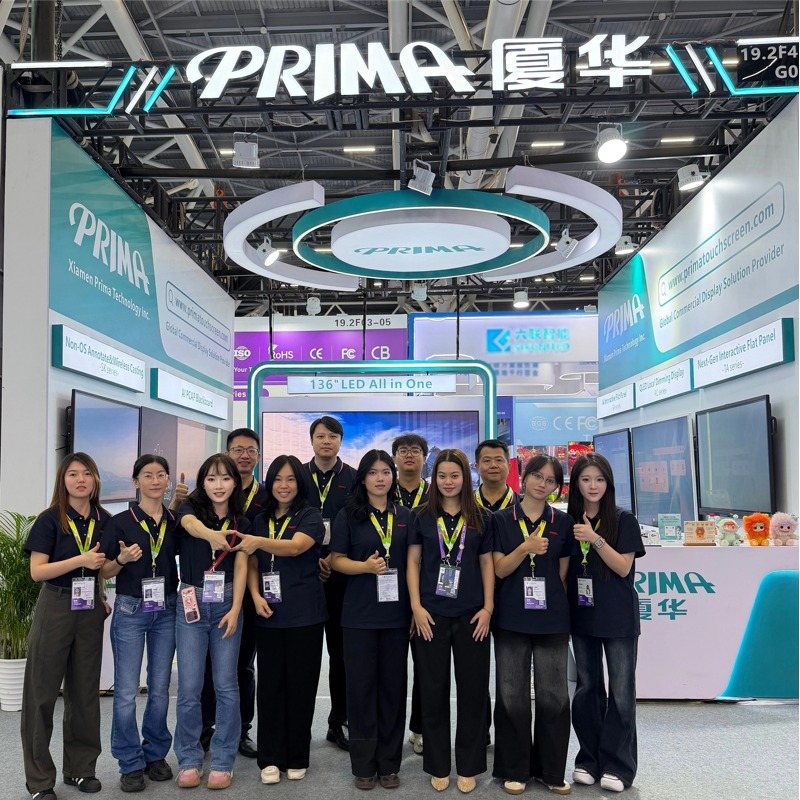
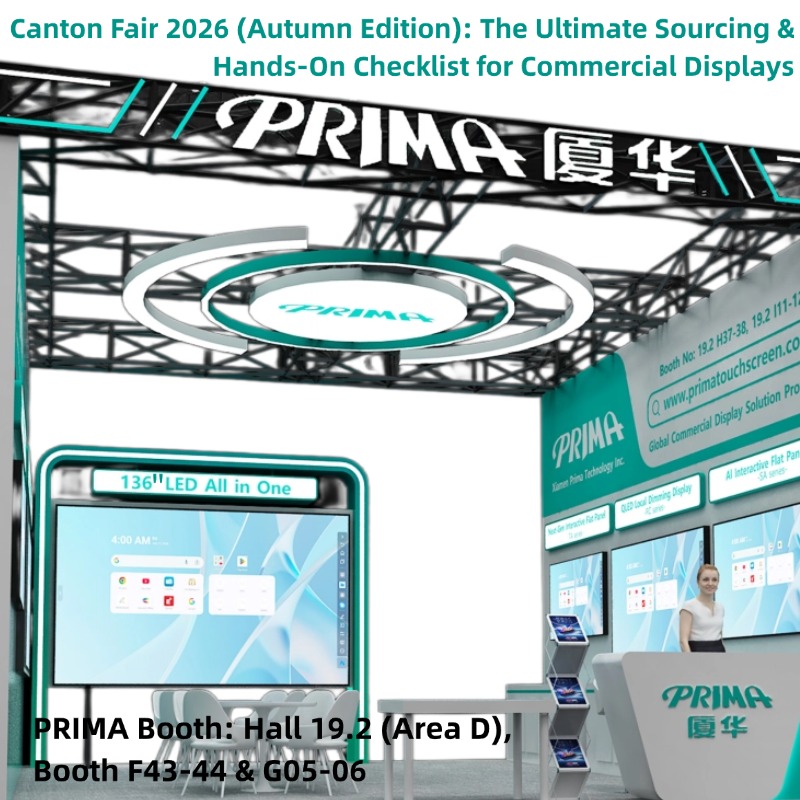
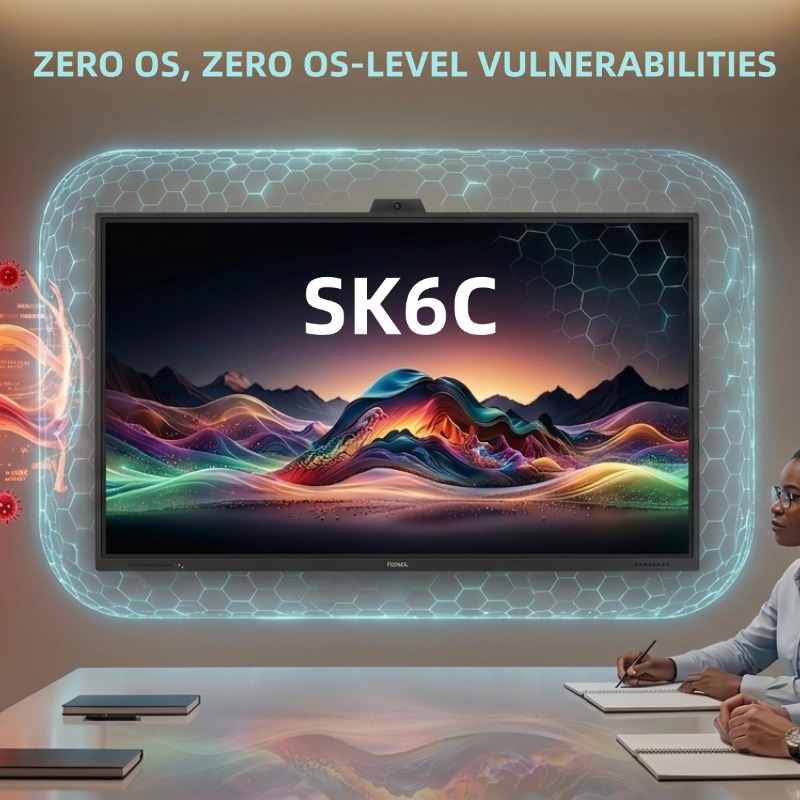
    Navigating the massive halls of the Canton Fair can be overwhelming. With countless screens competing for your attention, the real challenge for distributors and system integrators isn't just comparing technical specs—it’s identifying a partner who delivers a seamless fusion of hardware reliability, intelligent software, and long-term industrial stability.         As a professional commercial display manufacturer with 40 years of expertise, PRIMA invites you to our booths (19.2H37-38 and 19.2I11-12) to see how we’ve moved past the hardware-only era into a new age of AI-integrated solutions. Here is how to evaluate high-performance displays this week:     1. Match the Series to the Scenario A top-tier partner provides tailored solutions, not just generic panels. When testing our Interactive Flat Panels (IFP), look for these specific engineering benchmarks:   The RC Series (Visual Precision): Experience QLED Local Dimming. This technology provides the ultimate picture quality with deep blacks—essential for high-end corporate environments. The SA Series (Intelligent Collaboration): Featuring Dual AI Cameras, this series represents a new level of smart meeting engagement and auto-framing. The SK Series (Security & Simplicity): A non-OS, ready-to-use solution. Perfect for secure sectors requiring instant wireless screen sharing without the complexity of a built-in Android system.     2. The "Teaching Assistant" Inside the Screen In 2026, software is the true differentiator. We invite you to experience Uboardmate CC, a tool that has evolved into a proactive teaching partner:   Rich Resources: Access subject-specific tools and immersive Virtual Experiments. Built-in AI Power: Test real-time AI Translation, AI Q&A, and AI Search. These features help educators and presenters bridge language gaps and find information instantly.     3. Engineering at Scale: From Digital Signage to LED Giants Whether for a boutique retail store or a massive corporate lobby, look for consistency in industrial design:   135" All-in-One LED Display: Witness the seamless clarity of our COB (Chip-on-Board) technology. It’s more durable and offers a much more comfortable viewing experience than traditional SMD LEDs. Equal Bezel Digital Signage: Notice the symmetry. Our four-sided equal bezel design ensures a professional look in both portrait and landscape modes.     4. Unified Management: Connecting the Ecosystem For large-scale projects, the biggest hidden cost is maintenance. Our CMS (Centralized Management System) offers unified management on one screen, connecting everything. The ability to remotely monitor and update a global fleet of devices is what transforms a product into a long-term business solution.     The Bottom Line: Your OEM/ODM Partner Successful sourcing at the Canton Fair requires looking beyond hardware specifications to the stability and heritage of the supplier. As a leading commercial display manufacturer, PRIMA offers robust OEM and ODM services to help you scale your brand globally with the confidence of a 40-year manufacturing backbone.     Visit the PRIMA team this week to discuss your next project: 📍 Booth: 19.2H37-38 & 19.2I11-12 📅 Date: April 15th – 19th, 2026
    Read More
  • Defining the Standard: How PRIMA’s Flagship IFP is Shaping the Future of Classrooms at MMCO 2026
    Defining the Standard: How PRIMA’s Flagship IFP is Shaping the Future of Classrooms at MMCO 2026
    Apr 02, 2026
    [Live from Moscow] The event halls are buzzing this week as MMCO Expo 2026 kicks off in Moscow. Among the vast array of educational technology on display, PRIMA’s latest flagship Interactive Flat Panel (IFP) at Booth A26.2 has emerged as a major focal point for educators, IT directors, and government integrators across the CIS region.             This isn't just another display board. It is a high-performance hub designed for the next generation of AI-driven pedagogy. Here is why this specific flagship model is defining the new industry standard:     1. Intelligence at Sight: The Dual-Lens AI Camera The most discussed hardware feature at our booth has been the Integrated Dual-Lens AI Camera system. Unlike standard cameras, this dual-lens setup provides superior depth perception and wider viewing angles. In a modern classroom, this translates to smarter auto-framing, improved teacher-tracking, and a hardware foundation ready for future AI behavior analysis—essential for hybrid learning environments.     2. Flagship Performance: RK3576 & Massively Expanded RAM Speed is the ultimate user experience. Our flagship IFP showcased at MMCO is powered by the high-performance RK3576 chipset paired with massive RAM capacity. In our live demonstrations, visitors are witnessing zero-latency multitasking. Whether it’s running complex 3D simulation software or switching between multiple high-resolution resources, the system remains fluid and responsive—meeting the high demands of the Russian educational curriculum.     3. Security Meets Simplicity: Google EDLA Data security is a top priority for educational institutions in 2026. This flagship Interactive Flat Panel is Google EDLA certified, meaning it offers a secure, native Android environment. Educators can log in to their Google Workspace accounts with enterprise-grade protection, while IT managers gain the peace of mind that comes with official Google security patches and simplified device management.     4. Manufacturing Excellence for the CIS Market As a dedicated Commercial Display Manufacturer, PRIMA’s presence at MMCO 2026 is a testament to our commitment to the CIS market. We aren’t just delivering hardware; we are providing a vision of what a "future-proof" classroom looks like—where high-end manufacturing meets intelligent software.     Visit us at Booth A26.2 to experience the future of education firsthand.
    Read More
1 2 3 4 5 6 7
A total of7pages

Leave a Message

Leave a Message
If you are interested in our products and want to know more details,please leave a message here,we will reply you as soon as we can.
submit

home

products

Contact