What Are You Looking For?
 Web
Web
 Web
Web
The global interactive flat panel (IFPD) market is at a fascinating crossroads. With Google’s recent release of Android 17, the conversation around commercial and educational displays is rapidly shifting from basic touch specifications to operating system longevity and edge-AI capabilities.
For AV integrators, school IT directors, and corporate CIOs planning hardware procurement for the upcoming semesters, this transition poses a critical question: How do you invest in hardware today that won't become obsolete when next-generation software ecosystems mature?
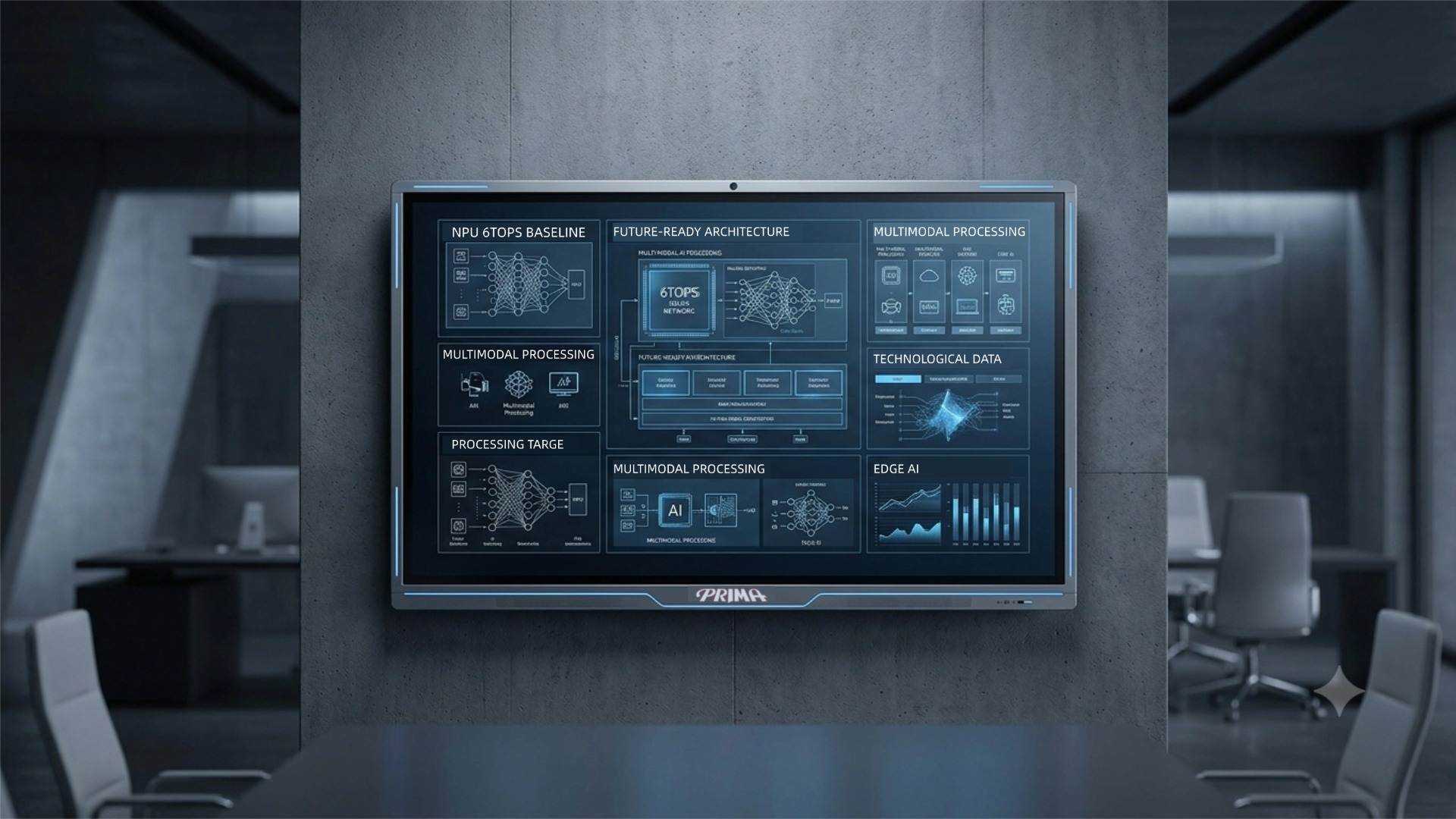
The answer doesn’t lie in chasing unoptimized software promises, but in choosing the right hardware foundation. Here is a realistic, conservative look at why NPU-driven architecture (specifically 6TOPS platforms) is the safest and most strategic bet for your current procurement cycle.
It is no secret that the commercial display industry moves at a different pace than the consumer smartphone market. While Android 17 has officially made its debut, the B2B ecosystem requires rigorous adaptation. Silicon providers and original equipment manufacturers (OEMs) must undergo extensive testing to ensure maximum stability, enterprise security, and Google EDLA compliance before a commercial-grade upgrade package is deployed.
Therefore, expecting an immediate, out-of-the-box Android 17 deployment on day one in the enterprise sector is unrealistic.
However, procurement is about looking 3 to 5 years ahead. When the mainstream stable packages for Android 17 eventually roll out to the commercial market, older displays running on low-tier, legacy chipsets will simply not have the computational headroom to support it. Buying a display without specialized AI hardware today means accepting early depreciation tomorrow.
In 2026, the performance of an IFPD is no longer determined solely by the CPU or GPU. As edge-AI features—such as real-time handwriting prediction, multi-frame facial tracking, and local voice-to-text translation—become standard, the NPU takes center stage.
While ultra-premium, niche IoT chipsets boasting 10TOPS and above are entering the experimental market, they often come with prohibitive cost premiums that disrupt standard public tenders and school budget allocations.
On the other hand, the 6TOPS NPU platform represents the ideal sweet spot for commercial deployment:
Sufficient Computational Headroom: A 6TOPS engine provides more than enough computing power to handle modern low-latency writing algorithms and classroom multi-modal interactive software seamlessly.
Built for Next-Gen Architecture: Crucially, a 6TOPS hardware base provides the exact structural redundancy required to align with future OS upgrades, such as Android 17’s enhanced resource-management protocols.
Cost-to-Performance Efficiency: It delivers enterprise-grade AI capabilities without forcing distributors to price themselves out of highly competitive educational and corporate bids.
By anchoring your procurement on a 6TOPS platform, you are securing a "Future-Ready" chassis. You gain maximum stability under current enterprise operating systems today, while ensuring the hardware isn't a bottleneck when the software landscape evolves.
If you are drafting a request for proposal (RFP) or evaluating vendors for a large-scale rollout in late 2026 or 2027, look beyond the screen resolution. Ensure your hardware checks these three essential boxes:
Hardware-Level NPU (Minimum 6TOPS Platform): Ensure the display has dedicated neural processing capabilities. This guarantees that local AI algorithms run smoothly without draining the main CPU/GPU, ensuring the device remains responsive during heavy multitasking.
Official Google EDLA Certification: Security and seamless access to Google Workspace or Microsoft 365 cannot be compromised. An EDLA-certified display ensures enterprise-grade encryption and native app integration right out of the box.
Architectural Longevity (Future-Proof Readiness): Choose a manufacturer that designs hardware with system upgrade paths in mind. A robust, mid-to-high-tier architecture ensures that when silicon providers finalize stable software packages for next-generation platforms, your hardware is fully capable of adapting.
The most successful B2B technology investments are those that balance current operational absolute-stability with future flexibility.
At PRIMA, our philosophy centers on engineering hardware platforms that respect the realities of the commercial supply chain while anticipating technological shifts. By focusing on robust architecture and optimized NPU baselines, we ensure that our global partners can bid with confidence today, knowing their clients' investments are protected for years to come.
A: Historically, the commercial display sector moves deliberately compared to the consumer mobile market. A stable, commercial-grade OS deployment requires rigorous adaptation from silicon providers, intensive hardware compatibility testing, and official Google EDLA certification validation. For enterprise and educational tenders in late 2026, stability remains the absolute priority, meaning current certified stable platforms (like Android 16/14) will remain the mainstream operational baseline while next-gen packages mature.
A: Procurement is about looking 3 to 5 years ahead. While current displays easily handle basic tasks, the upcoming wave of edge-AI software (such as zero-latency handwriting prediction, multi-modal interface management, and localized voice-to-text translation) demands dedicated neural processing. A 6TOPS NPU provides the exact computational headroom required to support these advanced features and future OS architecture changes, without the prohibitive cost premiums of unoptimized niche chipsets. It secures your investment today for tomorrow's software evolution.
A: Absolutely. PRIMA's engineering philosophy centers on Architectural Readiness. By deploying mid-to-high-tier computing platforms equipped with robust NPU capacities, we ensure that the underlying hardware chassis is not a bottleneck. When silicon providers and Google finalize stable, enterprise-grade upgrade pathways for next-generation platforms, our robust hardware foundation is fully engineered to adapt, protecting your critical CapEx from early depreciation.




 IPv6 network supported