Home

Interactive Display for Classroom

  • From Mistakes to Mastery: How Interactive Displays Support Hands-On STEM Learning
    From Mistakes to Mastery: How Interactive Displays Support Hands-On STEM Learning
    Dec 17, 2025
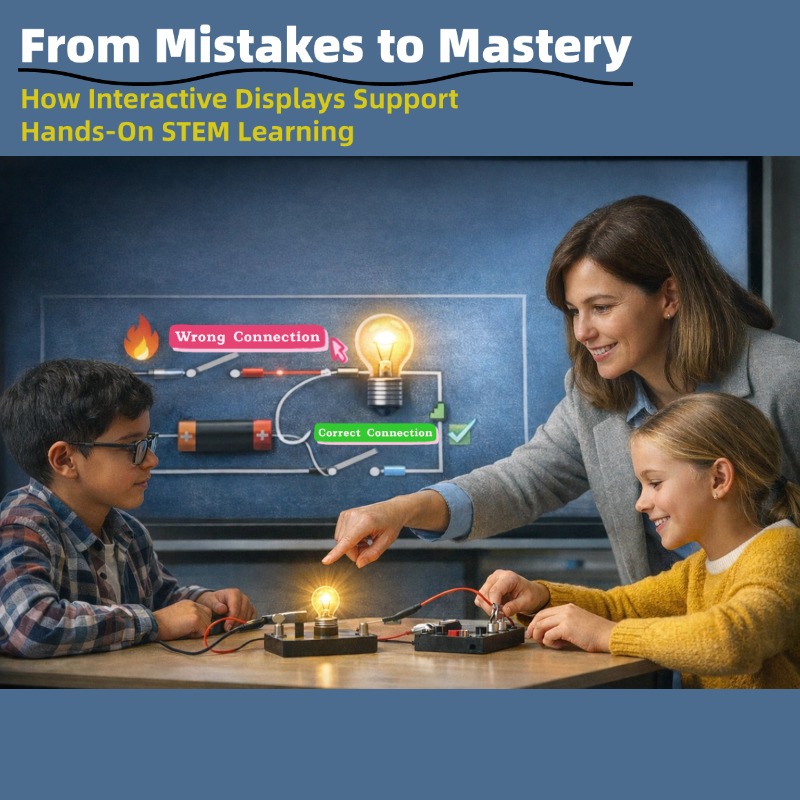
          In STEM education, learning rarely follows a straight line. Experiments fail, assumptions are challenged, and results do not always match expectations. Yet these moments of error are often where the most meaningful learning begins. In physics classrooms especially, abstract concepts such as electrical circuits, polarity, and current flow can be difficult to grasp through theory alone. Hands-on experimentation allows students to see cause and effect directly—but only when the learning process itself is visible, guided, and supported. This is where interactive display solutions play an increasingly important role.   Why Mistakes Matter in STEM Learning Traditional classroom experiments often focus on achieving the “correct” outcome. However, in real scientific practice, mistakes are part of discovery. A wire connected to the wrong terminal, an unexpected reaction, or a failed setup all provide opportunities for analysis and understanding. When students are encouraged to observe what went wrong—and why—it strengthens problem-solving skills, critical thinking, and scientific reasoning. The challenge for educators is making these moments clear, safe, and instructive rather than confusing or discouraging.   Making the Learning Process Visible Interactive displays help transform experiments from isolated actions into shared learning experiences. By combining physical experiments with digital visualization, teachers can: Highlight each step of an experiment in real time Annotate circuit diagrams and results directly on screen Pause, review, and correct setups together with students Compare expected outcomes with actual results This approach shifts the focus from simply “getting the right answer” to understanding the process behind it.   Interactive Displays as Teaching Tools, Not Just Screens In a hands-on STEM classroom, the role of display technology extends beyond presentation. Solutions such as PRIMA Smart Blackboard, used together with UboardMate CC, enable teachers to integrate live experimentation with digital instruction. Physical components—wires, bulbs, batteries, and switches—can be supported by on-screen explanations, annotations, and structured guidance. When a mistake occurs, it becomes a teaching moment rather than a disruption. Students can clearly see what caused the issue, how it was corrected, and what principle was involved. Over time, this reinforces both conceptual understanding and practical skills.   Supporting Safer, More Engaging Experiments STEM education often involves real equipment, which introduces both technical and safety considerations. Interactive display systems allow teachers to: Demonstrate correct setups before hands-on work begins Guide corrections immediately when issues arise Reduce repeated trial-and-error risks Maintain student engagement without unnecessary interruptions By structuring experimentation through a shared visual platform, classrooms become more controlled, efficient, and effective learning environments.   What This Means for Schools and Education Providers For schools, system integrators, and education decision-makers, the goal is not to add more technology—but to support better teaching outcomes. Interactive displays, when applied thoughtfully, help: Enhance STEM curriculum delivery Improve classroom interaction and student participation Support inquiry-based and project-based learning models Align physical experimentation with digital instruction Rather than replacing traditional teaching methods, these tools strengthen them.   From Errors to Understanding In STEM education, mastery does not come from avoiding mistakes—it comes from understanding them.   By making experiments visible, interactive, and collaborative, display solutions help turn errors into insights and challenges into learning opportunities. As classrooms continue to evolve, the focus remains the same: supporting educators and students in learning not just what works, but why it works.  
    Read More
  • The Future of Commercial Displays: From Screens to Smart Scenarios
    The Future of Commercial Displays: From Screens to Smart Scenarios
    Jul 14, 2025
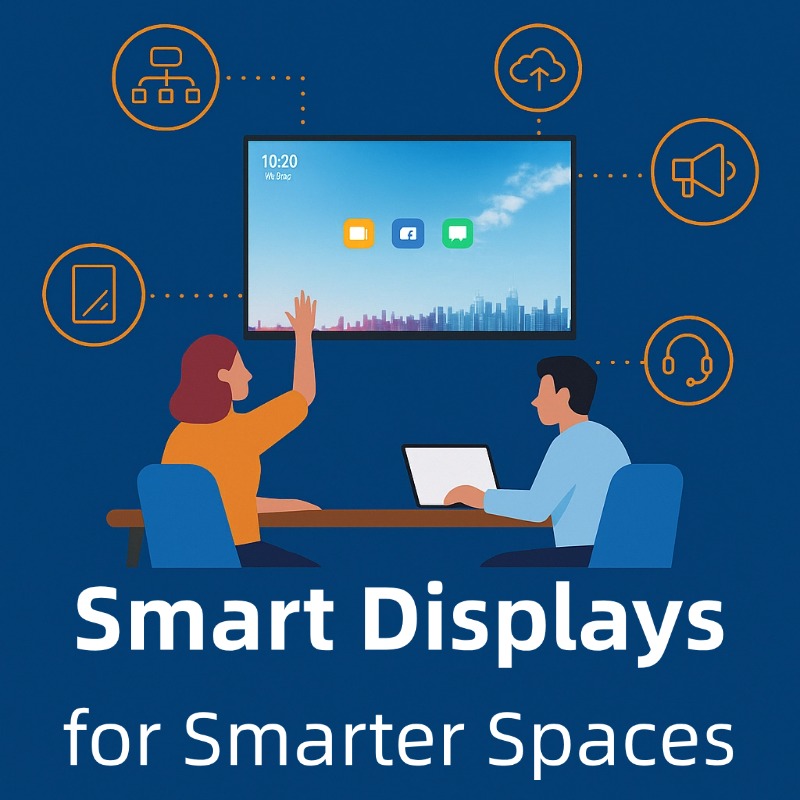
    As digital transformation accelerates across education, transportation, and enterprise sectors, commercial display technologies are evolving far beyond flat screens. In 2025 and beyond, the industry is shifting its focus from hardware alone to intelligent, scenario-driven solutions that combine display, interactivity, and centralized control.   🔍 1. Scenario-Based Integration Is the New Standard Gone are the days of generic display installations. Whether it's a smart classroom, a metro station, or a corporate boardroom, end users now demand solutions tailored to their specific environments. That means integrated systems—touchscreens, signage, communication, and IoT control—all working together.   🔧 2. All-in-One Systems Streamline Operations Modular hardware is giving way to all-in-one systems that simplify deployment, reduce maintenance, and improve usability. Interactive flat panels, for example, can now manage device control, content scheduling, and even classroom collaboration from a single interface.   ☁️ 3. CMS Platforms Enable Centralized Management With the growing need for real-time control and dynamic content, centralized management systems (CMS) have become critical. Modern CMS solutions allow administrators to remotely monitor, schedule, and customize content across multi-site networks—be it a university campus or a nationwide retail chain.   🌱 4. Sustainability Is Now a Core Metric Smart doesn’t just mean connected—it also means responsible. Energy-efficient panels, green-certified factories, and smart scheduling that reduces screen-on time are now expected by global buyers and governments alike.   📶 5. The Role of IoT and Interoperability The future of commercial displays lies in their ability to interface with broader systems—from building access to audio-video communication. The ability to connect with IoT sensors, SIP intercoms, and cloud services is no longer a luxury—it’s a necessity.   The commercial display industry is moving toward smart, scenario-based experiences. As this shift continues, innovative solutions like PRIMA’s Interactive Flat Panel and CMS platform are helping businesses, educators, and governments stay ahead.
    Read More
  • The Evolution of Collaborative Spaces: How Interactive Displays Drive Organizational Efficiency
    The Evolution of Collaborative Spaces: How Interactive Displays Drive Organizational Efficiency
    Jun 30, 2025
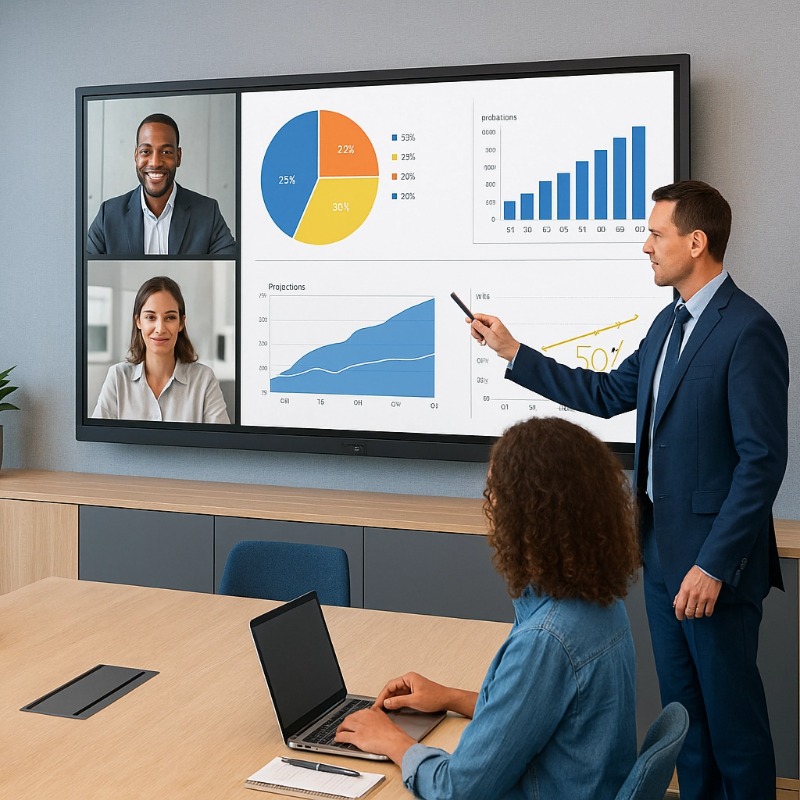
    As hybrid work and digital transformation continue to reshape how teams operate, collaborative spaces are entering a new era. Traditional meeting rooms with basic projectors or whiteboards are no longer enough. Today’s fast-paced decision-making and cross-functional communication demand more immersive and efficient ways to work together. That’s where commercial interactive displays step in—as the new nerve center of modern collaboration.   Changing Needs, Evolving Spaces From project reviews to brainstorming sessions and cross-border meetings, collaboration today is fluid and multi-dimensional. Teams require seamless access to content, tools, and each other—whether they’re in the same room or miles apart. This shift calls for more than just screen-sharing. Organizations now seek smart, integrated display solutions that enable: Multitasking with split-screen layouts: View reports, live meetings, browser content, and more at once Wireless casting: Share content from laptops, tablets, or smartphones without the hassle of cables Touch and annotation tools: Write, draw, or drag with ease for clearer, faster communication Built-in conferencing systems: Launch remote meetings instantly with Zoom, Teams, or custom platforms These features do more than enhance productivity—they transform passive meeting rooms into active collaboration zones.   Industry Trends and Applications At PRIMA, we’ve observed the rising demand for collaboration-ready display solutions across various industries: Tech & creative sectors: Teams need immersive spaces to review designs, co-create, and iterate in real time Education & training: Teachers rely on interactive tools to engage both in-person and remote learners Corporate offices: Headquarters and branch teams collaborate via live video, shared dashboards, and remote presentations Collaboration is no longer just face-to-face—it’s screen-to-screen, content-to-content, and idea-to-idea. A smart display enables synchronized thinking, no matter where people are.   Our Approach: Technology That Serves People At PRIMA, we design commercial display products with one goal: to enhance how people work and connect. Whether it’s through our all-in-one flat panels, intelligent CMS platform, or multi-device integration, we focus on three pillars: clarity, simplicity, and stability. We believe a great collaborative space isn’t just equipped with advanced tech—it’s shaped by intuitive experiences that support real human interaction.   Let’s build workspaces that inspire ideas and accelerate action.PRIMA is ready to power the future of connected collaboration.
    Read More

Leave a Message

Leave a Message
If you are interested in our products and want to know more details,please leave a message here,we will reply you as soon as we can.
submit

home

products

Contact